For over two decades, dynamic PHP-based Content Management Systems (CMS), particularly WordPress and Joomla, have powered a massive percentage of the public web. However, in high-assurance cybersecurity architectures, these platforms represent an ongoing source of security breaches, unauthorized database dumping, and Remote Code Execution (RCE).
This breakdown explores the structural attack vectors in dynamic PHP applications, inspects the exploitation kill chain, and demonstrates why immutable static architectures eliminate these vulnerabilities by design.
1. The PHP CMS Exploitation Kill Chain
The attack surface of a dynamic CMS expands with every third-party plugin and theme introduced to the environment.
The infographic below illustrates the end-to-end vulnerability chain:
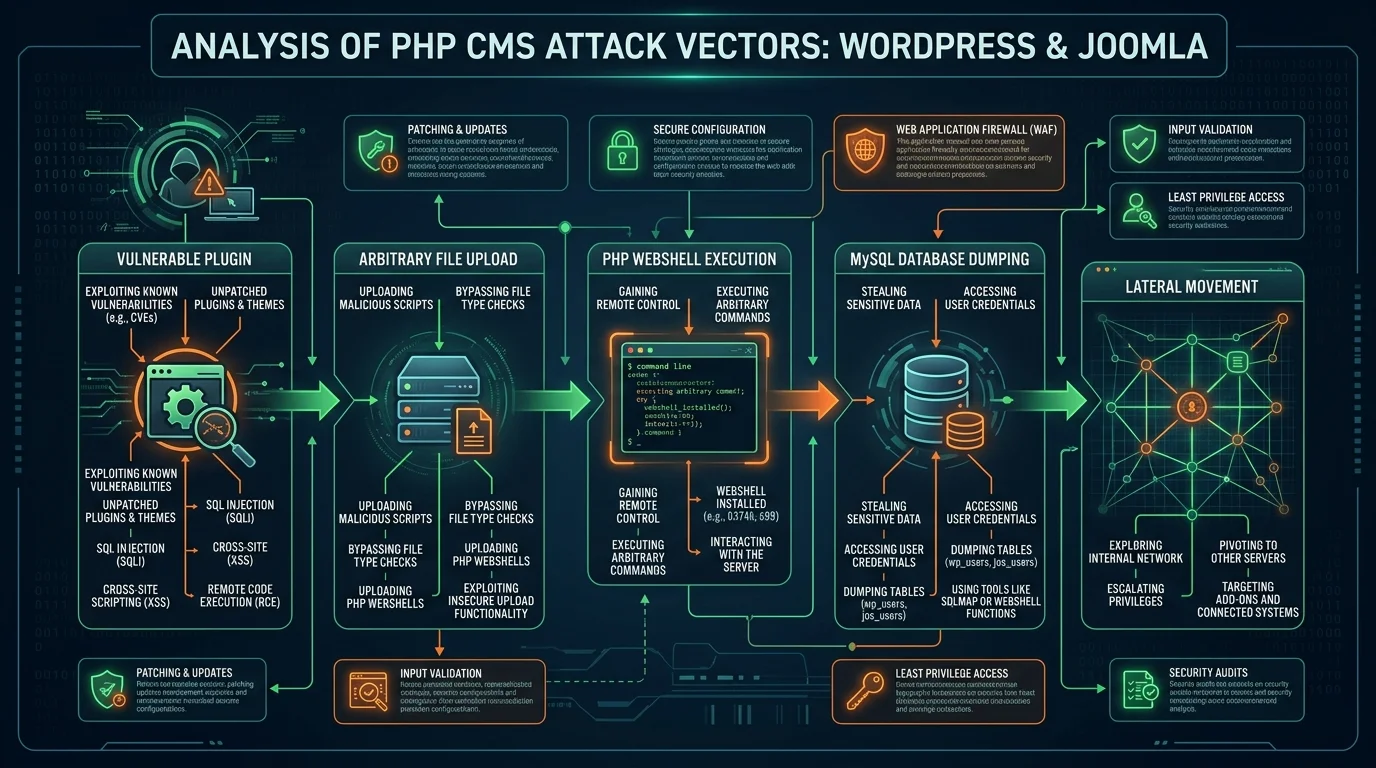
The 5 Stages of Compromise:
- Vulnerable Plugin / Theme: Exploitation of unpatched CVEs or missing input validation in third-party extensions.
- Arbitrary File Upload: Bypassing client-side checks or MIME filters to deposit
.phpscripts into upload directories. - WebShell Execution in Runtime: The PHP runtime executes arbitrary system commands via dangerous built-in functions (
eval,system,passthru). - Database Dumping: Extracting database credentials from
wp-config.phporconfiguration.phpfollowed by full SQL data exfiltration. - Lateral Movement: Utilizing the compromised web server to pivot across internal subnets.
2. Comparative Analysis: Dynamic PHP Stack vs. Immutable Static Architecture
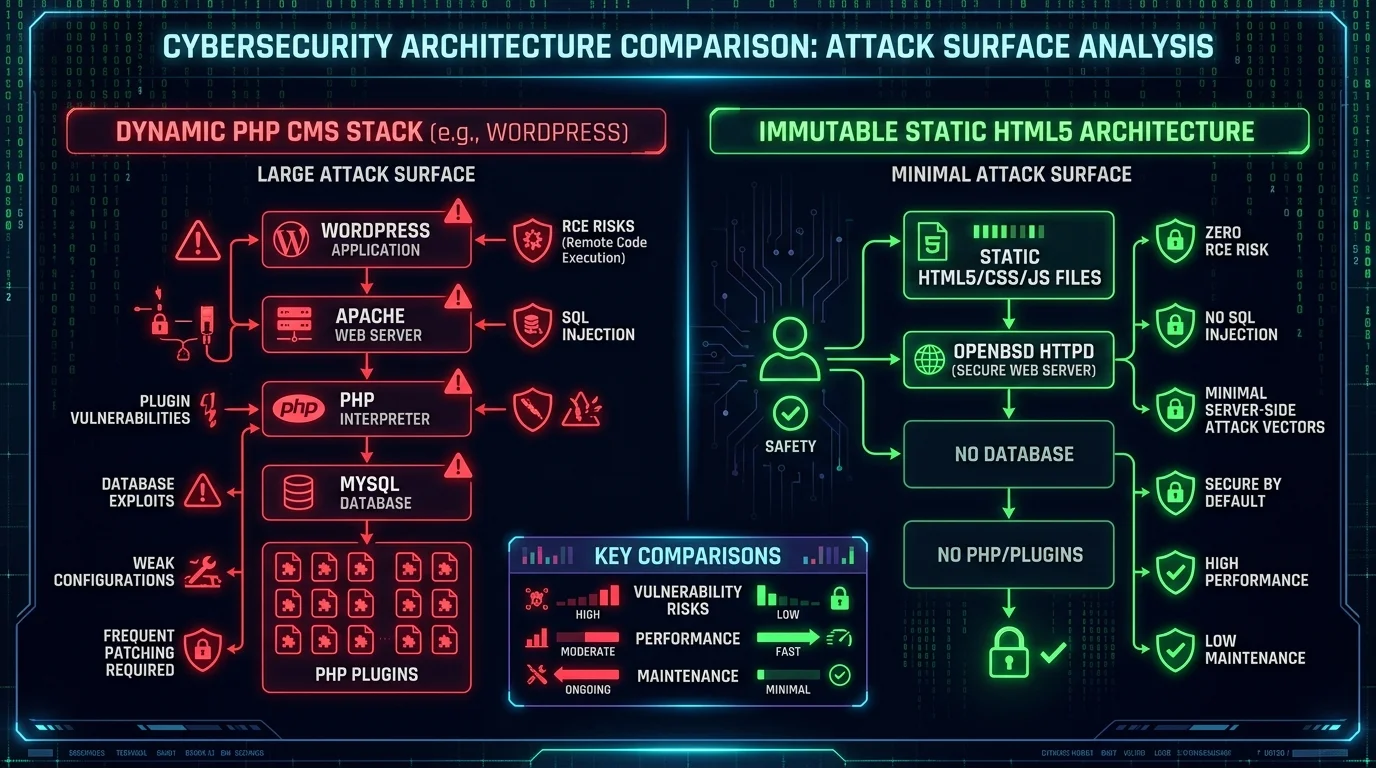
Security Risk Matrix:
| Security Dimension | Dynamic PHP CMS (WordPress / Joomla) | Immutable Static Architecture (valmis.net) |
|---|---|---|
| Databases (RDBMS) | Exposed to SQLi, brute-force, and credential leaks. | Non-existent (Zero SQL engines). |
| Server-Side Runtime | PHP/Zend Engine actively parsing dynamic requests. | Non-existent (Zero runtime interpreters). |
| Plugin Ecosystem | Dozens of opaque third-party dependencies. | Zero dynamic dependencies. |
| Filesystem Permissions | Requires write permissions for uploads (www-data). |
Strict Read-Only (unveil("/htdocs", "r")). |
| Zero-Day Impact | High ongoing risk of RCE. | Zero execution surface. |
3. Summary & Takeaways
Unless an application fundamentally requires anonymous users writing records to a database in real time, serving pre-rendered static assets from an isolated UNIX daemon like OpenBSD httpd(8) provides superior resilience, zero maintenance overhead, and sub-millisecond response latency.